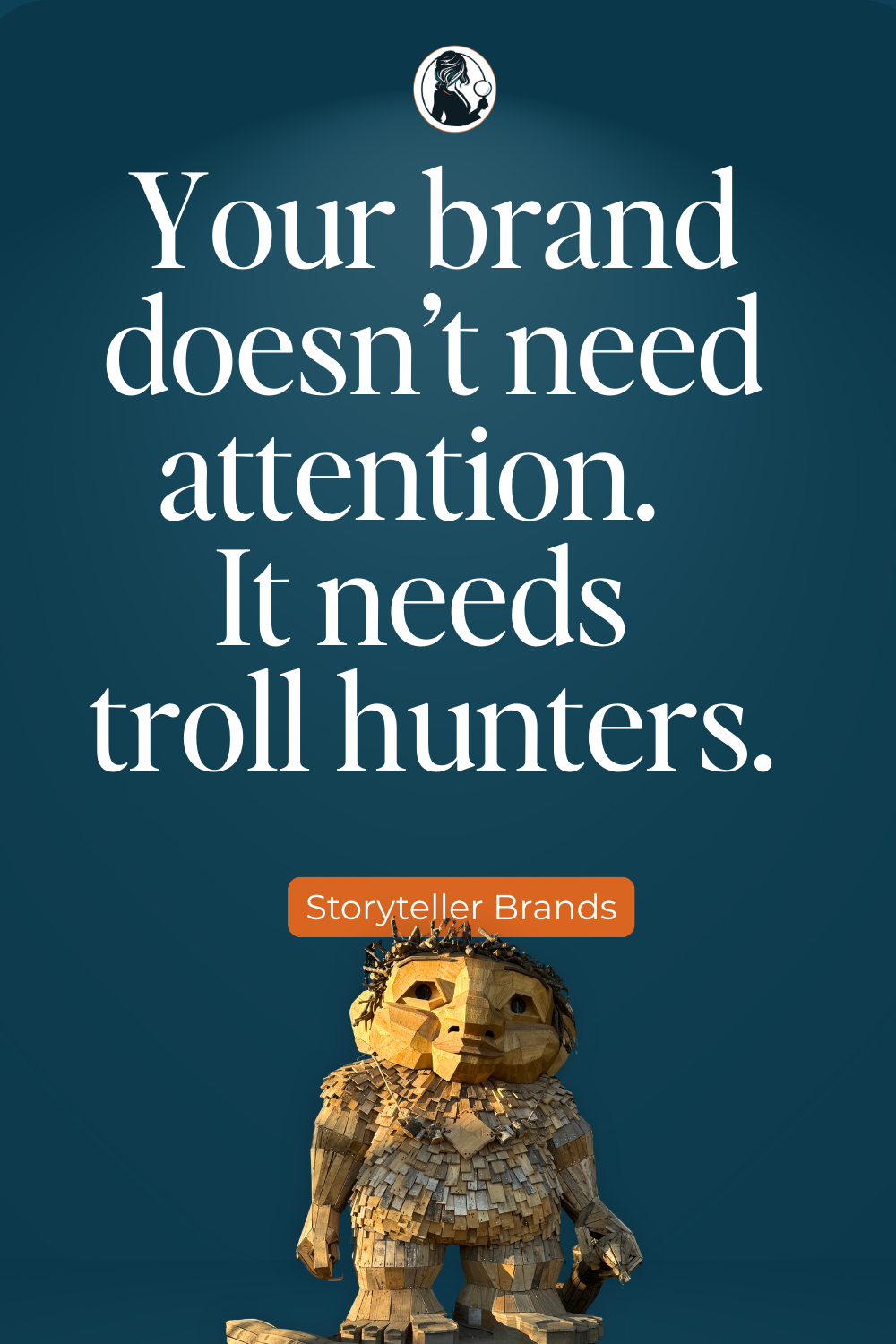
Your Brand Doesn’t Need Attention. It Needs Troll Hunters.
The first thing I noticed wasn’t the troll.
It was the behavior.
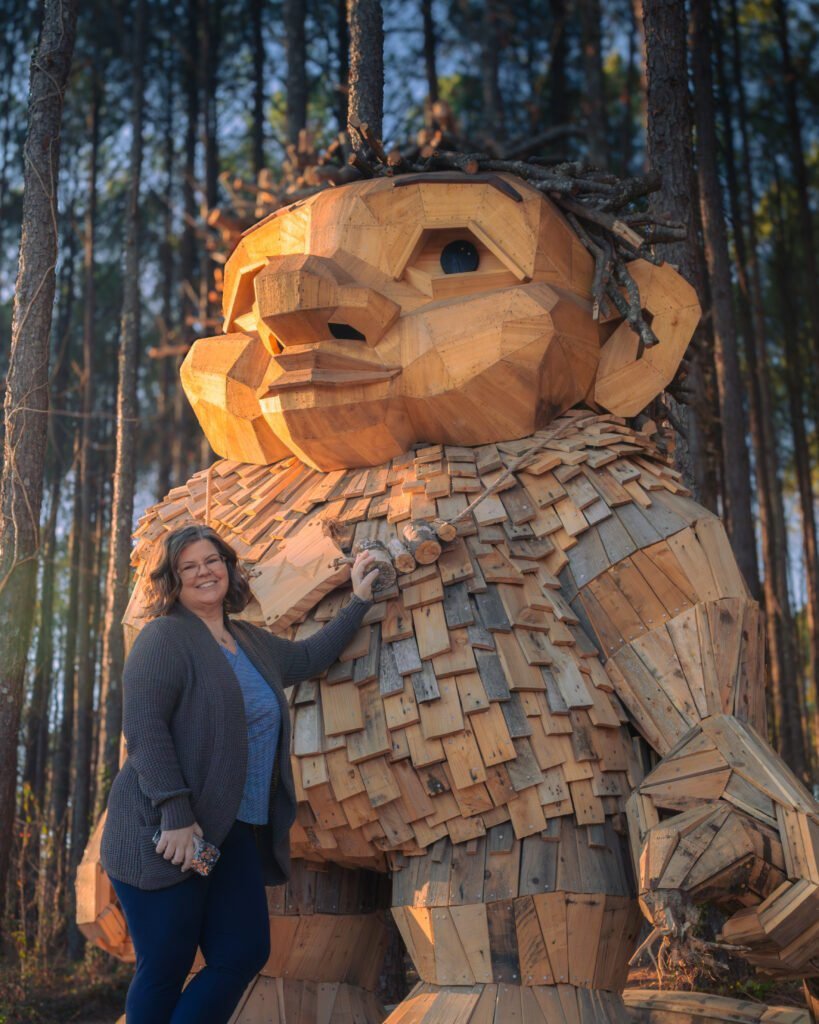
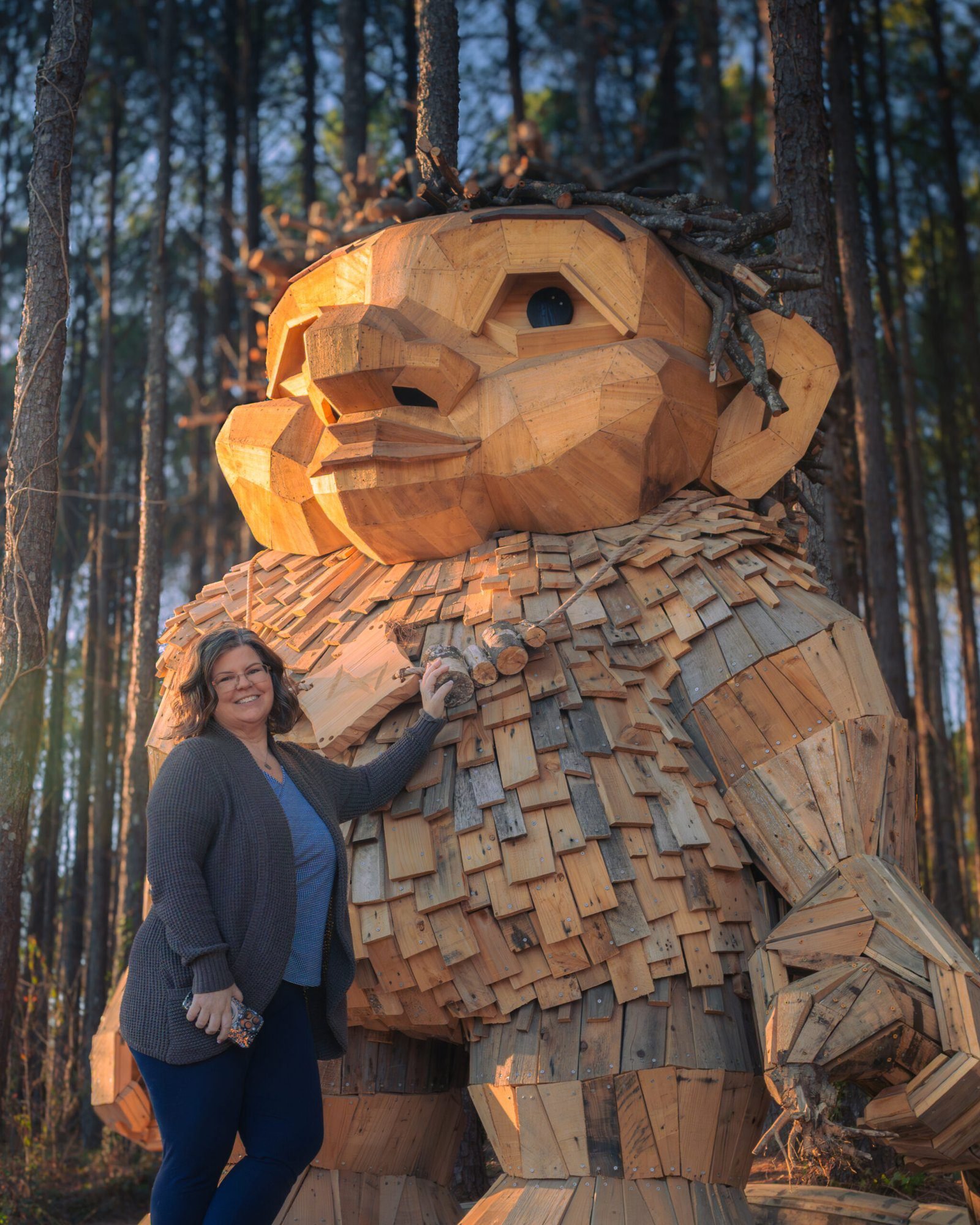
We were standing in the woods in Dix Park in Raleigh, North Carolina. We hadn’t even reached the troll yet — a wooden giant built from scrap wood — and no one was treating it like public art. You know that posture. Distanced. Polite nod.
Parents weren’t saying, “Look at the sculpture.” They were saying, “Let’s go find him.” Kids weren’t posing and leaving. They were scanning the trees. One family debated which troll protects the “Grandmother Tree.” Another read the poem out loud like it was a chapter they already knew.
Later, I found Facebook groups where people track locations, trade tips, and post proof-of-discovery photos.
This wasn’t observation.
It was participation.
And that’s the mystery.
Why This Matters if You’re Building a Brand
I’m not telling you this because I want you to install a 20-foot sculpture outside your office.
I’m telling you this because I watched people reorganize their Saturday around a story. Families drove across towns. Kids wanted to solve the puzzle and go searching. Volunteers gave up weekends to help build installations.
That doesn’t happen by accident. And it’s not about budget or creativity.
It’s about structure.
(And yes, I’m a two-time Troll Hunter now.)
The Framework Hiding Underneath
After 25 years building brands and publishing three novels, I started to see the pattern.
Some brands generate attention.
Some create clarity.
A rare few create belonging.
The difference isn’t their budgets, the platforms they use, or even creativity. It’s structure.
From that, I built the Storyteller Brand Framework. It maps how brands move people through four stages:
- Story — the emotional spark
- Meaning — the structure that makes it believable.
- Belonging — the role someone steps into
- Change — the behavior that follows
When those layers are built in order, something shifts.
Standing in Dix Park, it was clear that Dambo had done exactly that.
He didn’t just create art. He constructed a world.
There are plenty of reviews of the experience itself.
Here, we’re solving something more strategic:
How did he build belonging directly into the brand?

Story is the Emotional Spark
If you’ve never seen one of Thomas Dambo’s trolls in person, picture this: massive wooden gentle giants, some over 20 feet tall, built entirely from reclaimed wood. Pallets. Scrap boards. Discarded materials that would otherwise be landfill. He’s built more than 160 across the world, often hidden in forests and parks where you have to go looking for them.
They have names. Poems. Backstories. A global map that connects them.
But before there were trolls in Raleigh or anywhere else, there was a belief running through Dambo’s life. As a child, he listened to a cassette about a troll girl protecting the forest. He grew up reusing materials, later building installations from whatever scrap was available.
The trolls don’t feel trendy. They feel inevitable.
For Dambo, the belief is simple: there should be no such thing as trash.

Photo: Thomas Dambo
He didn’t start with a product and then invent a story. He started with the belief and built from it.
In Raleigh, the trolls protect the “Grandmother Tree.” That detail isn’t decorative. It tells you how to interpret what you’re seeing. You’re not walking up to a wooden structure.
You’re meeting a guardian.

That’s Story doing its job. It makes the world feel real before you even decide what you think about it.
Brand TRANSLATION
If your story doesn’t shape
what you build,
it won’t shape behavior.
Meaning Is Where Your Brand Becomes Believable
You can say there should be no such thing as trash.
Or you can build a 20-foot troll out of it.
That’s the difference between Story and Meaning.
Every troll is made entirely from reclaimed materials — roughly five tons per installation. The material reinforces the belief. The belief reinforces the character. The character reinforces the setting.
Nothing feels disconnected.
When you stand beneath one of these giants in the woods, there is no gap between what he says and what he’s built.

Contrast that with what often happens elsewhere. A brand talks about sustainability but ships excess packaging. It claims transparency but buries pricing in layers of fees.
The story sounds right. The build doesn’t match.
Dambo doesn’t ask you to believe him. He shows you.
You don’t read a paragraph about waste reduction and decide if you agree. You stand beneath five tons of reused wood in the middle of a public park.
The belief is visible. Physical. Unavoidable.
Meaning isn’t better messaging. It’s building in alignment with what you say. When belief and build match, the brain relaxes. It doesn’t need to scan for inconsistencies. It doesn’t need to question motives.
Trust forms. But trust alone doesn’t create Troll Hunters.
For that, the visitor’s role has to change.
Brand TRANSLATION
Meaning isn’t about
explaining your values better.
It’s about building in
alignment with them.
Belonging is Where Identity Forms
The shift didn’t happen when families stood in front of the troll.
It happened when their role became clear.
“The trolls are shy creatures. They like to be found, not announced.”
That sentence isn’t just charming. It assigns identity.
If something wants to be found, you’re not just visiting.
You’re a finder.
Dambo builds the entire experience around that role. Each troll has a name and a poem. Each location has a story tied to the environment. There’s a global map connecting them. They’re hidden in nature, which requires searching. Many are built with local volunteers who help bring them to life.
People don’t just visit. They become Troll Hunters.

That phrase shows up in Facebook groups. Parents use it with their kids. It becomes shorthand for the experience.
Language matters here.
When someone starts calling themselves a Troll Hunter, something internal has already shifted. They see themselves differently.
And once identity shifts, behavior follows.
That’s belonging.
And it’s engineered through language, artifacts, and shared ritual — but only because story and meaning are already in place. You can’t skip the first two layers. If the belief isn’t clear and the build doesn’t support it, the ritual feels manufactured.
But when story and meaning are in place, belonging doesn’t feel forced. It’s earned.
Brand TRANSLATION
Belonging begins
when someone can answer,
“Who am I inside this world?”
Change Is When Behavior Aligns
By the time we get to change, the question isn’t whether people liked the trolls.
It’s whether anything about them shifted.
Change is when behavior follows identity.
You can see this with Dambo. The trolls don’t just attract visitors, they create people who call themselves Troll Hunters, an identity that requires action.
They attach their name publicly to the experience.
They drive hours out of their way.
They invest time in the map.
They give up weekends.
They bring friends.
They defend it.
They treat the experience like something that belongs to them.
Each of those behaviors costs something — time, energy, reputation. I saw it in the smallest way, too. Someone had painted a rock with Mother Strong Tail’s name and tucked it into her hand. No sign. No announcement. Just a quiet offering left behind.
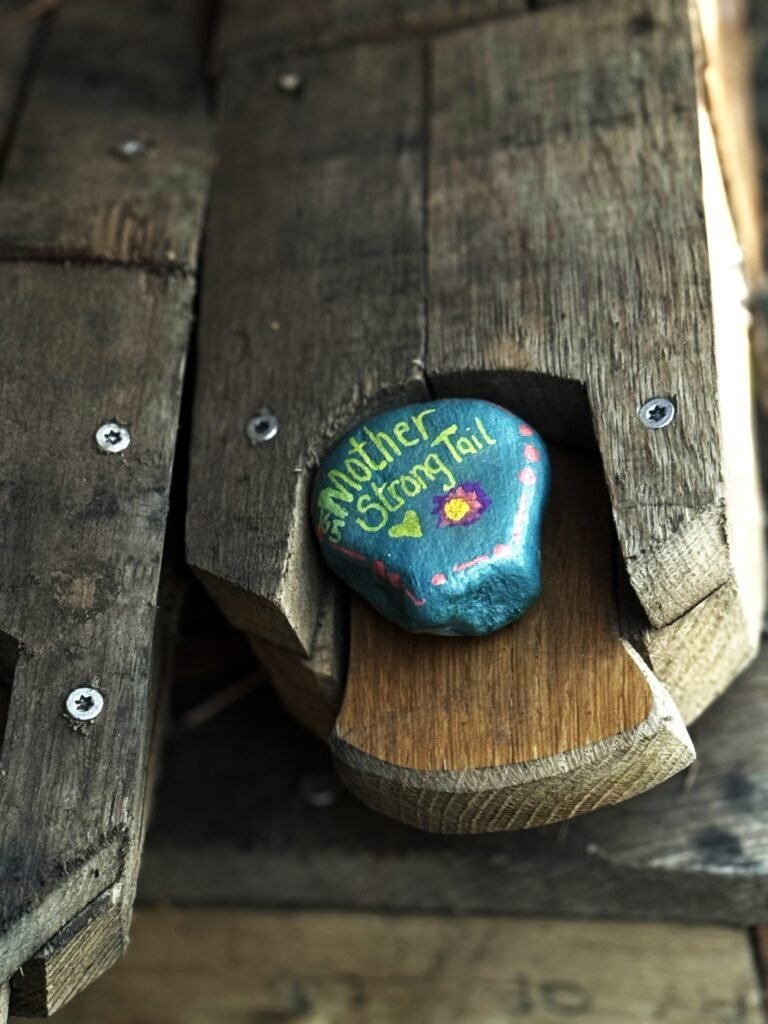
That’s not tourism. That’s ownership.
When people start adding to your world instead of just consuming it, something has shifted.
People don’t make those tradeoffs casually. They do it when something matches who they believe they are — or who they want to become.
That’s change.
Story created the emotional spark. Meaning made it credible. Belonging assigned the role. Change is when behavior reflects that role.
That’s not engagement.
It’s alignment between identity and action.
Brand TRANSLATION
Change isn’t measured
by what people say.
It’s measured by
what they sacrifice.
Here’s the Map for your Brand

If you want people to stay, advocate, invest, and commit, you build in order.
Start with Story. What belief actually runs underneath your work?
Move to Meaning. Does what you build visibly reinforce that belief?
Design for Belonging. What role does someone step into inside your world? What do they call themselves?
Measure Change. If they fully adopted that identity, what would they do differently? What would they sacrifice? What would they defend?
If behavior isn’t shifting, the gap is structural.
Thomas Dambo didn’t ask for loyalty. He built a world coherent enough that loyalty was inevitable.
Your brand can do the same — if you build in order.
Ready to see what your brand is building?
If people are consuming your content but not changing their behavior, the gap is rarely effort. It’s structure. The Foundation Story Audit shows you exactly where your brand holds and where the sequence is breaking down.
Story. Meaning. Belonging. Change.
We map it. You see it clearly.
And you walk away knowing what to build next.