In books, you know you need one.
In brands, you probably never learned you need this, too. (No, really.)
And in both cases, it can make or break your story. What is the missing piece?
That’s what we’re uncovering today.
Issue #011
. 🔎
I was somewhere in my fourth rewrite of my first (eventually published) novel when Alias saved it. Not the TV show exactly.
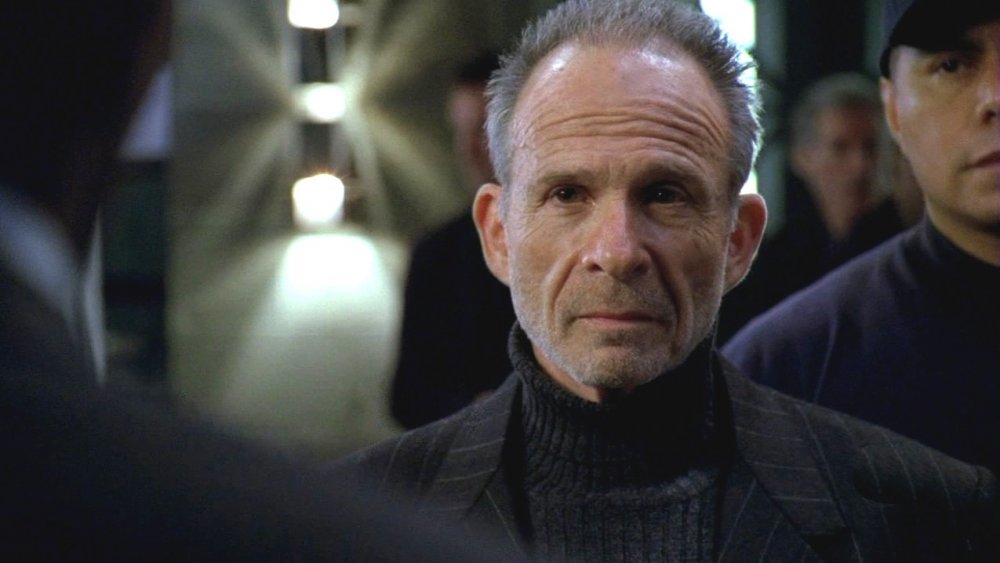
Sloane.
If you watched Alias, you know.
If you didn’t, Sloane was the Villain (with a capital V). Sophisticated, brilliant, completely convinced that every terrible thing he did was necessary.
I remember watching episodes on TIVO where he justified the unjustifiable to someone who trusted him. Not once, or twice, but over and over. He could look someone he genuinely loved in the eye and betray them without flinching.
He loved them, he just loved his mission more.
[And sidebar: If you’ve noticed a theme of TV in my newsletters? Guilty. I didn’t just learn story and structure from books. I learned it from anywhere I could find a story. ]
Watching Sloane shifted something for me. Not about the show, but about my book. I watched him repeatedly betray people for his mission. My villain would never do that. He couldn’t.
Well, at first he was dead. (I know. How do you have a dead villain exactly? You see my problem.)
But even when he demanded to be alive, he didn’t believe in anything strongly enough. He was a villain purely because he stood in the way of my hero and heroine and the plot required it. He might as well have had a twirling mustache and a maniacal laugh. (Any Muppet fans out there?)
So, I went back to my manuscript and I gave him a spine. He didn’t just get more scenes. He got gravity. Purpose. A complete self-absorbed belief system of his own that moved him forward in his own hero journey. And every step of that journey created an obstacle for my main protagonists.
The lesson that changed how I wrote (and eventually how I built brands) forever:
Your hero is only as as strong as your villain.
This is paramount in books.
Turns out, it’s also key to building your brand.
Did someone forward this? Not subscribed yet? Get upcoming issues of The Missing Story every Thursday. Subscribe here.
|
🔎 Under the Magnifying Glass
We’ve all heard the hero journey line. Your customer is the hero. Your about page says so. Your messaging. Your content is supposed to say so. Heck, even Burger King made a slogan out of it.
But truthfully? That’s like one third of the story we need — and it’s missing a really big piece.
Because if the only people in your stories who are heroes are other people?
Your brand has no teeth.
You need a villain.
You need a fight.
Without it, your own hero’s journey is more like a brisk walk. And your audience will sit on the sidelines wondering where the story is going.
So. What does a real villain look like? Sloane, obviously. But there’s another excellent example to share:
Meet Amy Dunne.
If you’ve read Gone Girl (and if you haven’t, close this, go read it, and come back.), you know the flip. The moment that narrative turns and you realize what she’s actually been doing this whole time. (It’s soo good.)
I’m pretty sure I threw the book down and yelled, “No, you did not!” Mad respect and more than a little stunned.
Amy isn’t just a villain, though.
She’s an unreliable narrator who constructed an entire reality around her fight. She didn’t just believe she was right. She authored her own story so completely that everyone else had to live inside it. Every move calculated. Every detail deliberate.
You felt her fight pulling at you even before you understood it.
That’s the Villain Test.
NOT: Is your villain scary?
BUT: Can you feel their fight moving underneath everything, even before they say a word?
Now.
I know what you’re thinking. Jeannie, what the ever-lovin’ does this have to do with a brand story?
I’m so glad you asked.
Think about the brands you defend in conversation. Not just “hey, I tried this thing and you’ll like it.” Defend. The ones where you’ve found yourself saying, “No, but you don’t understand what they’re doing…or why…”
Every brand you love has a villain. A fight.
Just like every story you love has one.
Let’s take one you won’t expect: Sesame Street.
(I follow all the characters on social, too. Some days, Elmo is the emotional support muppet we need.)
But Sesame Street has been doing this for over fifty years. Their villain: the zip-code lottery. The belief that quality early education belonged only to kids who could afford it.
They’ve never put that in a tagline. They don’t need to.
You feel it in every decision they make.
When HBO dropped them, they didn’t retreat. They moved to Netflix and insisted new episodes air simultaneously on PBS, free, the same day. Then they put hundreds of episodes on YouTube. Free. The largest digital library of Sesame Street content, available to anyone with a phone.
That’s not a content strategy.
That’s a fight with gravity.
And here’s what Amy Dunne and Sesame Street have in common (yes, two things I never thought I’d put in the same sentence):
You know their fight. You can feel it moving underneath everything they do.
That’s not personality.
That’s architecture.
🏛️ The “Rules” This World Runs On
Rule #1: Your villain is real if the world keeps going without you
While the villain in your novel is very real, the one in your brand story isn’t a person. (We hope.) It’s a belief. A system. A way things are done that everyone decided was fine or not worth fighting and kept doing anyway.
The test isn’t whether someone argues with you at a conference. It’s whether the world keeps operating as if your fight doesn’t matter.
Sesame Street looks at kids who can’t access quality education and says: this shouldn’t be normal. Plenty of content creators just… keep making content.
Here’s one for you authors and writers out there. There is plenty of belief that “historical accuracy” is required for any historical fiction. But… history was written by the victors. There are hundreds of years of accepted narrative that keeps producing the same stories. Maybe you’re the writer who tells the untold ones. You aren’t arguing with a person. (Well, there might be a reader or two…). You’re arguing with the system who decided whose story mattered.
For your brand: what keeps happening around the people you are compelled to help and serve that makes you angry on their behalf…and probably something your entire industry treats as perfectly normal?
That’s your villain.
If no one would disagree with your fight, it’s not a fight yet. But disagreement doesn’t mean a screaming match. It means the system keeps moving, indifferent, unconvinced. The villain doesn’t need to argue with you. It just keeps going.
🧠 Why Your Brain Calls This Magic
Here’s what research tells us about why this works.
We don’t just adopt beliefs. We adopt the fights attached to them.
Knowing what something is against is more clarifying to our brains than knowing what it’s for. Opposition creates definition. It gives the brain edges to work with — a shape it can recognize, a side it can choose.
This is called identity-based opposition. And it’s why a clearly named villain does something a mission statement never will: it tells people not just what you believe, but who they become when they believe it with you.
A brand with no villain is like a shape with no edges. You can see it. You just can’t hold it.
🕳️ Watch Out for The Trap Door
Here’s the trap I see most often with the villain and the fight.
People think it has to sound bold.
I did. I remember talking to my coaches about this not too long ago, because I am not a big voice. When people throw around advice like “be contrary” or “be bold” or “take a strong stance,” I always struggled with it. Everything I said out loud or wrote felt ordinary. Dumb. Not big enough to be a real fight.
So I kept softening it. Making it safer. More agreeable.
But here’s what I finally understood: your fight doesn’t come from personality. It doesn’t require a loud voice or a willingness to be controversial.
It comes from what you’ve seen. What you’ve watched happen to the people you serve, over and over, until staying quiet about it felt worse than saying it out loud.
My fight isn’t bold. It’s specific. I kept watching really smart people with strong businesses (experts at what they know and do) take surface-level advice that was incomplete, and then disappear into a content spiral that burned them out and built nothing.
To quote AI (but it’s true): I couldn’t stop seeing it.
That’s not a declaration. That’s just something I couldn’t ignore anymore. And when I looked at that, I looked at all the advice I knew was incomplete and not helping them.
That’s where your villain lives. Not in a bolder personality. In your experience, your way of seeing things and knowing what’s wrong.
(This is true for my fiction writers too: Your villains live in your books, yes. But the fight strong enough to make you write them, that lives in your brand. )
🧡 One Thing To Do Differently
Okay, this really is one thing. Finish this sentence in writing. Don’t think too long.
“I keep watching _____ happen to the people I serve, and everyone just keeps doing it.”
That blank is where your villain lives. That’s where your fight begins.
For my writers, this isn’t about your books. (Though it works there, too.) It’s about what made you write them. The thing you kept feeling or seeing that fiction felt like the only way to express it. That’s your brand fight and it lives underneath your stories, not just inside them.
One hint: If it feels too small or too ordinary, too obvious, that’s probably the one.
📌 Put This on the Post-It
Your brand doesn’t need a bolder voice.
Or a niche. Or to post more. It needs a fight.
Until next time,
|
|
|
We’re off on the road again at the end of this month! Heading back to our favorite RV spot at the top of the mountains. This is from last summer.
|