Why The Obvious Choice Gets Ignored
In this chapter
- Under the Magnifying Glass
- The “Rule” This World Runs On
- Why Your Brain Calls This Magic
- Watch Out for The Trap Door
- One Thing To Do Differently
- The One to Remember
You can someone a better path…and they’ll choose the one they’re on.
You know your product or service would make their life easier. Solve real problems. Actually help someone.
And still… “Nope, I’m good.”
There’s one thing that has to shift before anyone will choose something different.
That’s what we’re uncovering today.
This past weekend, I did something I always do.
I hopped in my car, rolled all the windows down, blasted my “happy driving” playlist and drove to Target.
I got there, parked on the left like I always do. Walked in on the left side.
And immediately…it was all wrong.
Because this wasn’t my usual store. It was a brand new one.
And they had flipped the entire thing around.
I still started on the left. Even though it was the grocery side, and those were always my last aisles. (Who wants cold items thawing in your cart while you look at shoes?)
It felt weird the entire time I walked through this new store. They’d opened just a week before, and it was closer to my house than my usual weekend errand run. So of course I went.
But I was clearly going the wrong way. It felt wrong.
The funny thing is… I didn’t change it. My brain had it mapped exactly how I move through a Target store, and that’s how I walked through it, no matter how weird it felt.
When I got back into my car, music turned back up, windows rolling down, a song came on that made me laugh. Because it was just so perfectly timed.
And I knew exactly what I’d just done…
and it’s the one thing brands get wrong about what makes someone choose to change.
Under the Magnifying Glass
The aisles at Target are just one tiny example.
If you were around in the 1900s, you remember Blockbuster.
Every Friday night, you got in the car, drove to the video store, wandered the aisles trying to find something that wasn’t already picked over, debated between movies, and settled on the one DVD you’d take home to watch.
It was a whole thing.
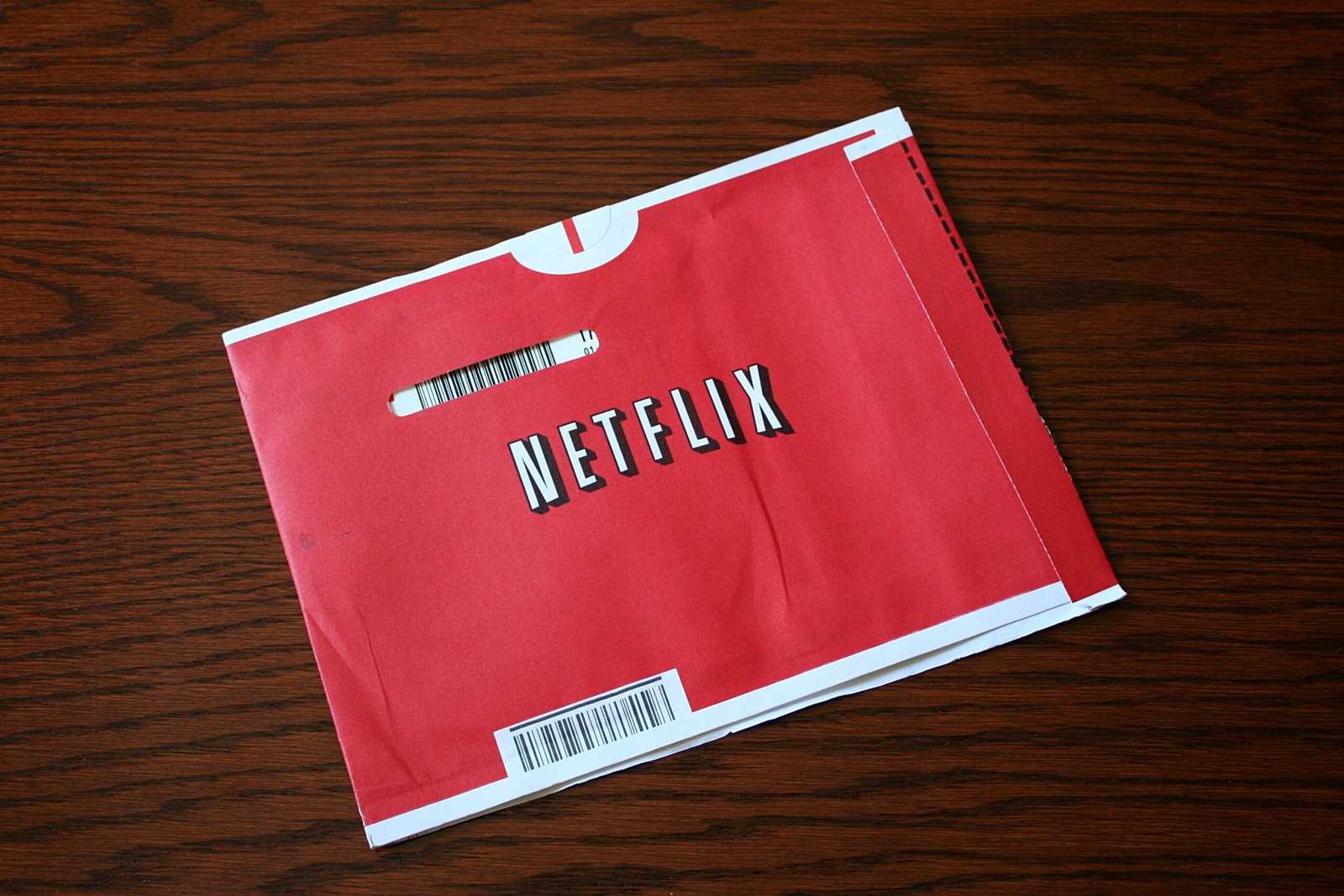
Then in 1998, Netflix showed up with something objectively easier.
You went online, picked a movie, and it showed up in your mailbox a day later in that red envelope.. No driving. No guessing. No “well I guess we’re watching The Princess Bride for the 11th time” because it’s what was left.
And yet…
people didn’t immediately switch.
Blockbuster kept growing for years after that. It didn’t hit its peak until 2004, six years after Netflix had already introduced something easier, faster, more convenient.
Better.
And I’m guessing you can make that same case for what you offer.
It’s better. Easier. Faster. It solves real problems.
But the rub is that even when something better exists, people don’t just move.
They stay with what they already know how to do.
The path they’ve already learned how to navigate.
The one that fits into their routine and doesn’t require them to stop and figure everything out again.
Because stepping into something new (even something better) means interrupting all of that.
This happened on the flip side, too.
Netflix didn’t shut down their DVD-by-mail service until three years ago.
People were still choosing that red envelope… all the way up to 2023.
So, the song that came on in the car made me laugh because it felt a little too accurate?
The Devil You Know.
The “Rule” This World Runs On
There’s a reason the devil we know keeps winning, even when something better shows up. And if you’re building a business, a brand, or even a story, this is the part that determines whether anything you create actually moves people… or just gets a nod and a “that was interesting.”
Rule #1: Change is a series of small decisions.
Change never happens in one big leap. It’s not one big yes moment.
It’s a sequence.
Choosing something different once — even saying, “Yes, I want that outcome” — isn’t the same as taking every step that comes after it.
Because every step asks something slightly different of you.
And somewhere along the way, it stops feeling worth it.
It gets inconvenient.
Uncomfortable.
Or just different enough to make you hesitate.
That’s where most change actually breaks.
Rule #2: Motivation has to stay connected to the outcome to keep someone moving on the path.
A promise of an outcome isn’t enough.
It doesn’t work in books.
It doesn’t work in movies.
It doesn’t work in business.
Imagine Katniss volunteering as tribute… if her sister’s name never been called.
The outcome is still there. Survival. Protection.
But the motivation? It’s not connected. So the change never happens.
That connection is what carries someone through all the small decisions along the way.
Without it, they don’t hesitate — they just go back.
When it comes to what drives that motivation, I heard the cleanest explanation for it on an episode of Diary of a CEO. Andrew Bustamante, a former CIA officer, broke it down into four forces that drive human behavior:
R.I.C.E.
- Reward : there’s something to gain
- Ideology : it aligns with what they believe
- Coercion : something is at risk if they don’t
- Ego : it connects to who they are
Ideology is the strongest. Coercion is the weakest.
Most offers (and brand stories) only really use one. Usually reward:
Save time. Make more money. Get better results.
Or coercion:
Limited time only! Get it before it’s gone. Only 2 left.
That works…to a point.
But the bigger the change, the more steps it takes, the more it disrupts what someone already does — the less reward or coercion can carry it.
Ideology and ego are different. They don’t just offer a result. They connect to what someone believes is true about their world — and who they are within it.
And when that connection is clear, the steps in between don’t feel random anymore.
They have a purpose. They have meaning. They feel like they belong.
Why Your Brain Calls This Magic
There’s brain magic here, too. It’s called status quo bias.
Familiar feels easier. Safer. More predictable.
So unless something feels important enough (personally, not just practically), the brain will stick with what it already knows. Even when something better is right in front of it.
And it’s why the obvious choice often gets ignored.
Watch Out for The Trap Door
Our biggest trap door here is that we see the outcome.
We see that better place our audience could be in, and it feels like the most obvious choice. Of course they want better, don’t they?
So we explain more. More reasons why better is… well, better. More benefits (and features.) More process. More steps.
But more never solves the “get a human to change” problem. It only makes it harder.
Because more adds decisions to a path that already has too many of them, without adding a single thread of ideology or ego to carry someone through.
And someone has to live through all of it to get to that final, blissful state.
One Thing To Do Differently
One of the best exercises I’ve found: grab a notebook, sit where you think clearly (for me, that’s my back porch), and write out every tiny decision someone has to make to choose what you offer.
Start making a list.
From finding you…
to understanding the offer…
to paying for it…
to all the small steps that come after, before they ever see the outcome they wanted.
Write it all out. Don’t skip anything.
Then go back through the list and ask: where does the motivation break? Where is there no thread of ideology or ego holding someone to the outcome?
Because the number of decisions on that path is usually a lot higher than we think. And every one of them needs a reason to keep going.
The One to Remember
If the next step doesn’t feel worth the effort, they won’t take it.
And if they don’t keep taking tiny steps, change never happens.